

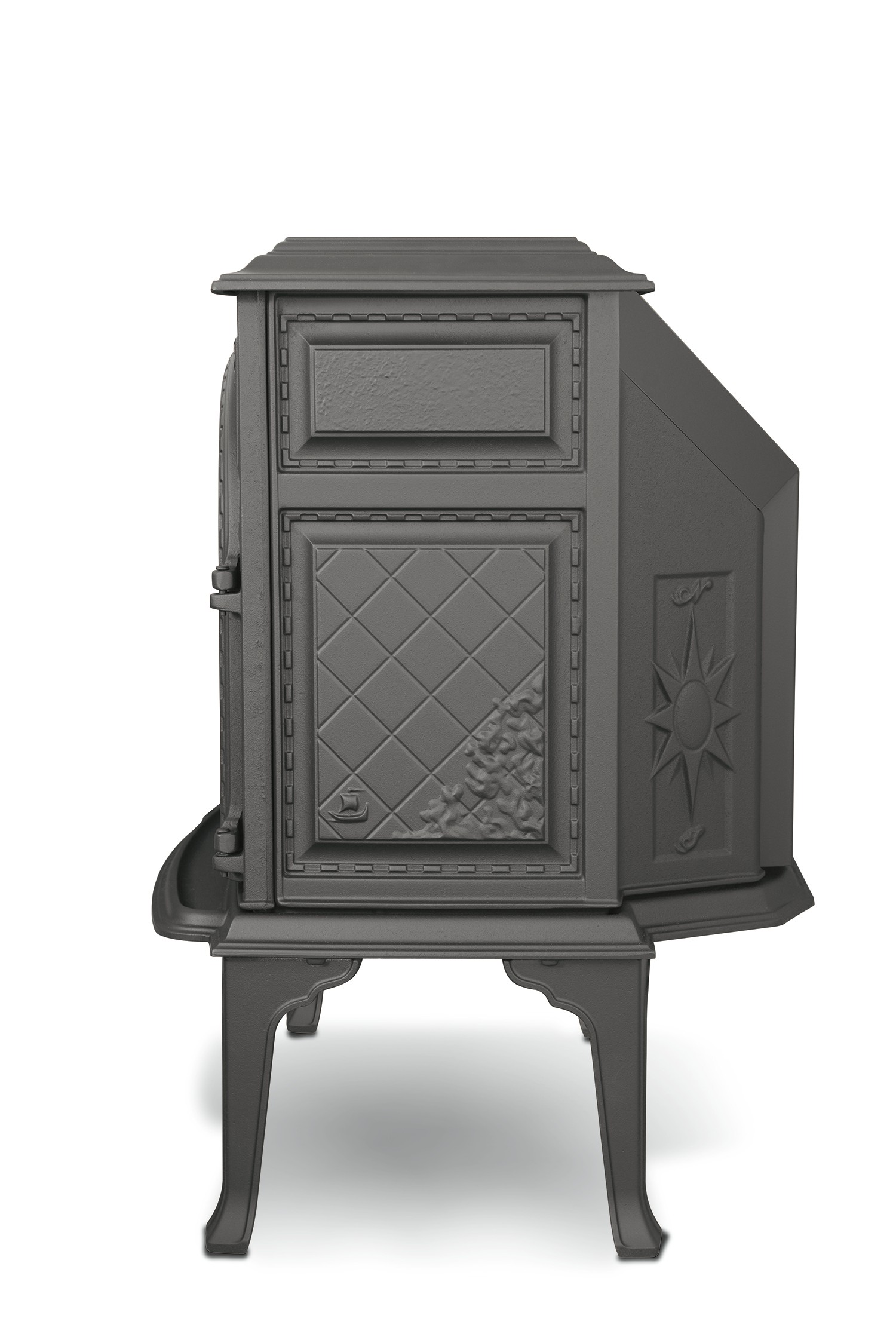
Jøtul GF 400 Sebago Gas Stove Selection and Installation
A gas stove that fits the way you use your home
The Jøtul GF 400 Sebago combines traditional cast-iron construction with nautical-inspired styling. It is a gas-stove option for customers who want a substantial, classic look and help selecting the right heating and installation configuration.
Serving the Triangle and surrounding Central North Carolina communities.
Models covered: GF 400 DV Sebago, GF 400 DV IPI Sebago, GF 400 BV Sebago
You do not need to choose the exact model before contacting us. Chimneys Plus helps homeowners in the Triangle and surrounding Central North Carolina communities compare options, understand installation requirements and choose a stove that suits their home.
When you’re adding a fire feature where none exists, a freestanding gas stove can offer beautiful flames, comfortable warmth, and backup heat with less remodeling and a smaller overall investment than a built-in fireplace. It’s still a significant home improvement, but typically avoids the framed enclosure and extensive finish work of a new built-in fireplace.
Why consider the GF 400 Sebago?
For almost every new gas-stove installation, Chimneys Plus recommends a direct-vent model such as the GF 400 DV or DV IPI Sebago. Its sealed combustion system draws air from outdoors instead of using air your home has already heated or cooled and sending it outside. This helps preserve indoor comfort while reducing draft complications that can affect naturally vented appliances in tightly built homes.
We rarely install B-vent stoves and generally consider the BV version for replacement projects where suitable B-vent piping is already in place. Chimneys Plus checks the venting’s compatibility and condition, along with combustion-air and draft requirements, before recommending reuse. The DV, DV IPI and BV configurations have different venting and control requirements and are not interchangeable installation choices.
Key product information
- Freestanding gas stove; not an insert that must go inside an existing fireplace.
- DV / DV IPI direct-vent and BV B-vent configurations; these require different installation planning.
- Natural gas and propane configurations; the correct fuel setup must be specified for the installation.
- Maximum input: DV 32,000 BTU/hr for either fuel; DV IPI 32,000 natural gas / 30,000 propane; BV 36,500 for either fuel. Input is fuel consumed, not heat delivered into the room.
- Manufacturer-listed heating capacity: GF 400 DV up to 2,000 sq ft; DV IPI up to 1,400 sq ft; BV up to 2,200 sq ft.
- Installation space includes required clearances and venting, not just the stove body.
Heating-area figures are general guidance. Actual coverage varies with climate, insulation, room layout, stove placement and air movement. Chimneys Plus helps match the stove’s heating range to your space.
Manufacturer product information: GF 400 DV Sebago; GF 400 DV IPI Sebago; GF 400 BV Sebago.
Help choosing, planning and installing your stove
We check the exact Sebago version before planning an installation. A BV model is not a substitute for a DV model on the same vent system, and the stove dimensions alone do not establish clearances or an approved location.
Electrical planning depends on the version you choose. The IPI model uses household electricity during normal operation and batteries for burner backup during an outage; the pilot-operated version does not require household power for its gas burner. Electrical accessories still need power. Chimneys Plus coordinates any required electrical work as part of your installation.
Chimneys Plus can help with product selection, installation planning, gas-line work and coordination of any required electrical work and permits. The Chimneys Plus team includes CSIA- and NFI-certified professionals. Together with our North Carolina general contractor and fuel-piping licenses, these qualifications reflect our commitment to knowledgeable fireplace installation and service. You have one company helping coordinate the project without having to work out each trade yourself.
Current specifications
- Input, natural gas: DV 18,000 to 32,000; DV IPI 17,000 to 32,000; BV 20,000 to 36,500 BTU/hr (BV per manual)
- Input, propane: DV 16,000 to 32,000; DV IPI 14,000 to 30,000; BV 19,000 to 36,500 BTU/hr (BV per manual)
- Size: 28.5 in high x 26.5 in wide; depth 20.5 in (DV, DV IPI) or 24 in (BV); weight 260 lb (DV, IPI) / 250 lb (BV)
- Flue exit: DV and DV IPI top or rear; BV rear
- DV efficiency: 72.49% NG / 75.60% LP steady state; AFUE 64.87% NG / 66.88% LP
- DV IPI efficiency: 76.60% NG / 77.02% LP steady state; AFUE 69.27% NG / 69.45% LP
- DV IPI ignition: SIT Proflame II intermittent pilot, continuous-pilot mode available
Source: manufacturer product page. Specifications can change with new model years, so we confirm them against the current documents before you buy.
Related products and services
- Valor Madrona Gas Stove
- Valor President Freestanding Gas Stove
- Gas line installation
- GasCheck annual gas fireplace service
- Financing options
Frequently asked questions
What is the Jøtul GF 400 Sebago?
It is a freestanding gas stove. Unlike a gas insert, it does not need an existing fireplace to contain it. It needs a suitable location, a gas supply and the venting and clearances required for its specific model.
Where can the GF 400 Sebago be installed?
We check the exact Sebago version before planning an installation. A BV model is not a substitute for a DV model on the same vent system, and the stove dimensions alone do not establish clearances or an approved location. We also check ceiling, mantel and side-wall clearances where applicable, gas-line location and any electrical needs. A clear floor area does not by itself establish that a location is suitable.
Heating suitability matters too. We consider the room’s size and layout, ceiling height, insulation and how you want to use the Jøtul GF 400 Sebago. The published heating-area estimate is a starting point, not a guarantee for every room. We compare its operating range, including lower-output settings, to help provide useful warmth without overheating the room.
Does the Jøtul GF 400 Sebago need a hearth pad or special flooring?
Not necessarily. The Sebago can be installed on a suitable wood floor without a separate hearth pad. It cannot sit directly on carpeting, vinyl, linoleum or wood-laminate flooring; those surfaces need specified protection beneath the full width and depth of the stove. The permitted protection materials differ between the direct-vent and B-vent versions, so Chimneys Plus checks the exact model and your flooring before planning the base. Final flooring requirements must follow the manufacturer’s installation instructions for your specific model. Chimneys Plus will confirm those when planning installation.
What kind of venting does the Jøtul GF 400 Sebago need?
For a new installation, Chimneys Plus recommends the GF 400 DV or DV IPI in almost every case. Their sealed direct-vent systems bring combustion air from outdoors and carry exhaust outside, rather than using air your home has already heated or cooled.
The BV version uses indoor air for combustion and relies on natural draft to carry exhaust outside. Outdoor air must replace the indoor air removed, which is an important consideration in tightly sealed homes. Direct vent avoids using that conditioned indoor air for combustion and helps reduce the draft complications associated with a naturally vented appliance.
We rarely install B-vent stoves and generally consider them for replacement projects with suitable existing B-vent piping. Chimneys Plus checks the venting’s compatibility and condition, along with combustion-air and draft requirements, before recommending reuse. An existing chimney can only be used with an approved configuration; we do not assume an old vent or chimney can be reused as-is.
Does the Jøtul GF 400 Sebago have to vent through the ceiling?
Not necessarily. The DV and DV IPI versions of the Jøtul GF 400 Sebago can vent through an exterior wall instead of continuing through the ceiling and roof. Some approved layouts still need a vertical section of pipe before turning toward the wall. The BV version is different: it needs a vertically terminated vent system, not a direct-vent sidewall cap. Chimneys Plus checks the selected model, vent route and required clearances to determine what works for your home.
Can the Jøtul GF 400 Sebago make use of my existing fireplace or chimney?
Yes! An existing hearth or chimney may offer a great setting for a Sebago gas stove. Rear-vent options are worth considering for hearth-extension placement, and the BV version has documented fireplace-recess and masonry-chimney wall-connection arrangements. Each option needs the correct model and approved venting system.
Chimneys Plus can assess the fireplace, hearth and chimney condition, available space, floor requirements, mantel and side-wall clearances, and vent route. DV, DV IPI and BV have different combustion-air and venting requirements, so we help choose the configuration that fits your home.
Does the Jøtul GF 400 Sebago need electricity?
The DV and BV versions use a pilot-operated burner system that does not depend on household power to produce heat. The DV IPI version uses 120V household power for its electronic controls, with battery backup for burner operation during an outage. Electric blowers and accent lighting, where fitted, need household power. Backup batteries are not a substitute for the IPI model’s normal electrical connection. Chimneys Plus can coordinate qualified electrical work as part of the project when it is needed.
Can the Jøtul GF 400 Sebago provide backup heat when the power goes out?
Yes! This stove can provide useful backup heat when household power is out, provided the gas supply remains available. The pilot-operated version can run its burner without household electricity; the IPI version uses backup batteries to maintain burner operation. Electric blower and lighting functions do not run on those backup batteries. We will explain the controls and battery maintenance for your model. Backup heat for the area around the stove should not be confused with a guarantee of whole-home heating.
Can I use natural gas or propane with the Jøtul GF 400 Sebago?
The GF 400 Sebago family has natural gas and propane configurations. We will specify the correct fuel setup and follow the manufacturer’s instructions for any approved conversion. Fuel types and components are not interchangeable without the proper conversion procedure.
Can Chimneys Plus install a gas line for the Jøtul GF 400 Sebago if I do not have one?
Yes! We are licensed in North Carolina to perform gas-line work and routinely include it with gas-appliance installations. We can evaluate the required supply, complete the gas-line work and handle the associated permitting as part of your project.
Is a permit required to install the Jøtul GF 400 Sebago gas stove?
In most cases, yes. Chimneys Plus confirms the permit requirements for your stove installation, including any gas-line or venting work, and handles the required permitting as part of your project. You won’t need to navigate that process on your own.
What maintenance does the Jøtul GF 400 Sebago need?
Regular professional service helps keep the burner, ignition system, glass, seals and venting in proper condition. Follow the manufacturer’s service schedule and operating instructions, and have unusual flame behavior, odors or ignition problems checked. Any backup batteries also need attention so the system is ready when you need it.
How do I know whether the Jøtul GF 400 Sebago is the right stove for me?
Consider the Sebago if its traditional styling appeals to you, then let us help evaluate the appropriate version. A higher input rating is not automatically the better choice for a room; comfortable operation and installation suitability matter too. Chimneys Plus can help you compare suitable options before you commit to a product.